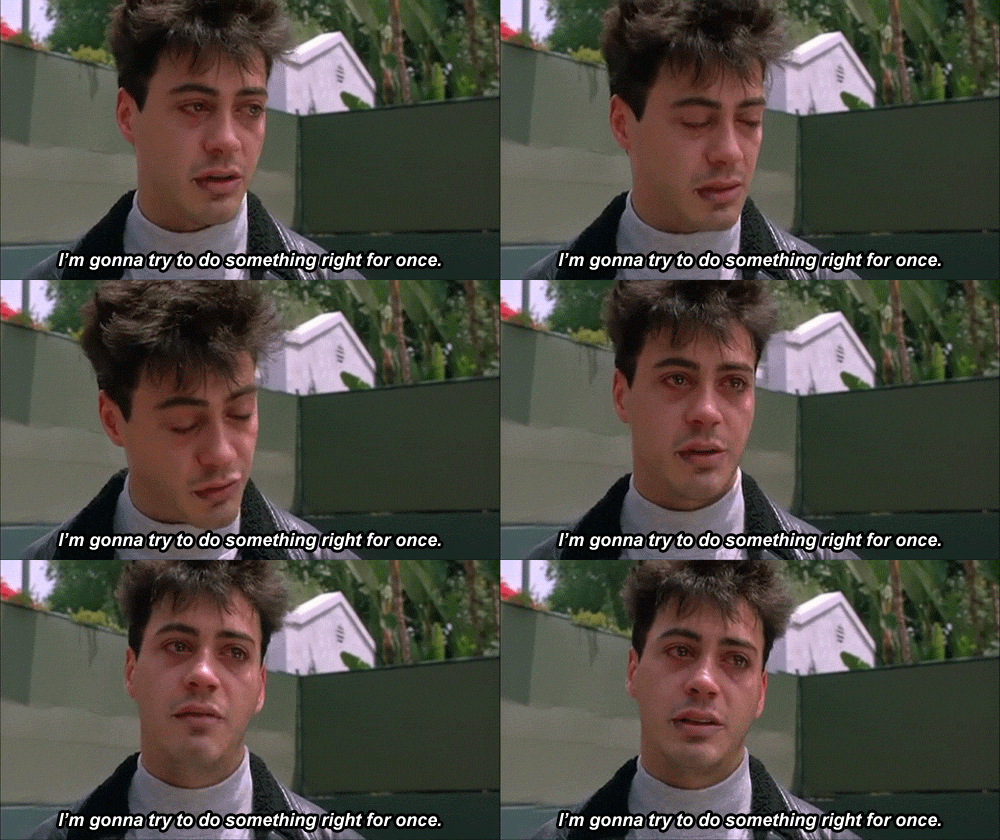
Clay and everyone else in Less than Zero are all
wusses. Their lives can be summed up in the first line of the book, “People are
afraid to merge on freeways in Los Angeles” (9). They all stall when they are supposed to merge and move on like normal people with their lives, take risks and change themselves for the better. They have stalled for so long that they can't even comprehend how to move forward anymore, evidenced by Clay's apparently unexplainable fixation with merging on freeways. I read Less than Zero the first time over winter break
and loved it (perfect holiday reading, clearly), but on the second go-around, I
realized that while I still enjoyed the book, I lamented the lack of a
character to root for. Knowing Brett Easton Ellis, though, this case
of the missing hero was probably intentional.
The only sign of strength that I could attribute to the
characters is how good they are at dismissal. Rip does cocaine on a mirror; his
vice is literally staring him in the face, yet he doesn’t even flinch at his
grotesque reflection. The mirror is just another piece in his life, a tool for
his preferred method of escape.
Sometimes I also wonder if this universally miserable
existence is caused by Los Angeles itself. After his one-night stand with
Griffin, Clay runs into Griffin’s maid, who doesn’t react to his presence at
the crack of dawn. Trent’s maid might as well be one of the struggling
teenagers at the center of the novel with her health history. Both maids are
foreigners who must have had to get used to all this debauchery in order to not only
condone but also participate in it. What is it about L.A. that is so
destructive to the human conscience and motivation to thrive?

No comments:
Post a Comment